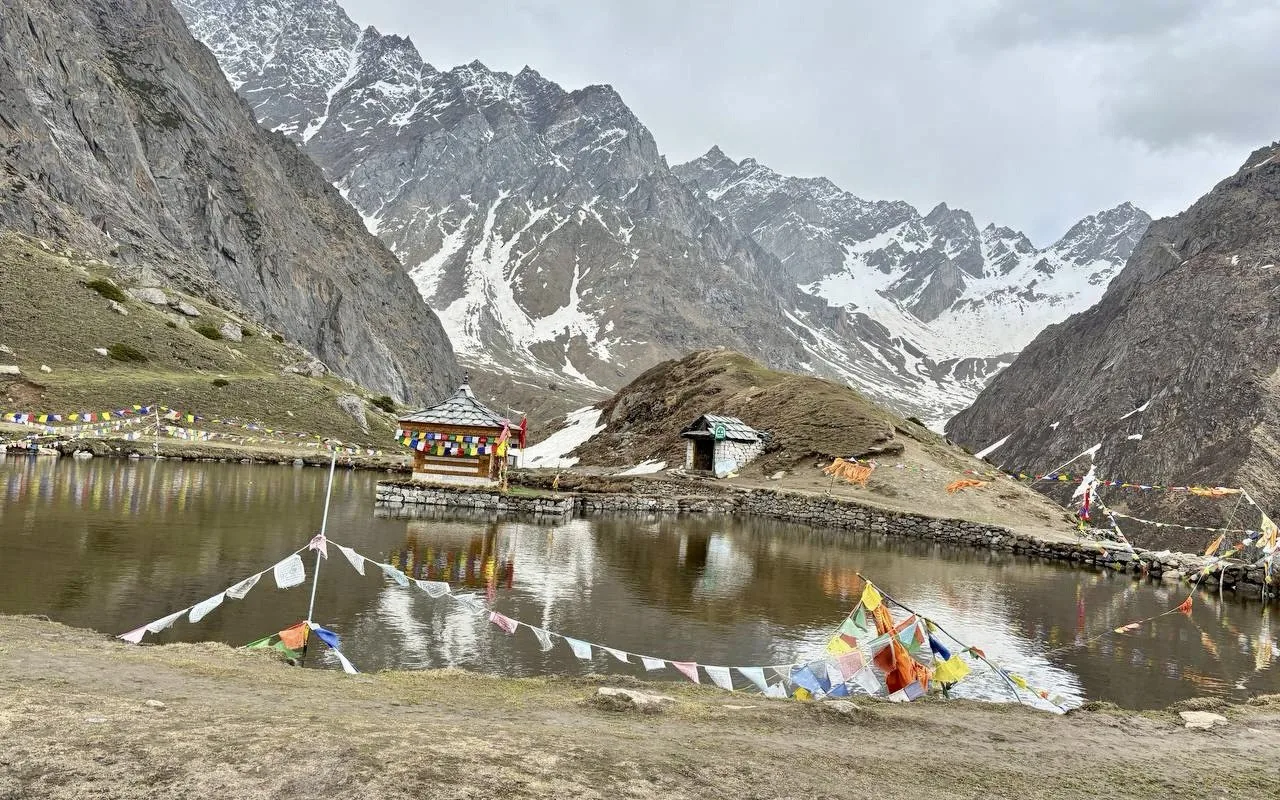

Yulla Kanda Trek at a Glance
| Detail | Info |
|---|---|
| Location | Kinnaur district, Himachal Pradesh |
| Maximum altitude | About 4,800 m (15,750 ft) |
| Duration | 5 days / 4 nights from Delhi |
| Difficulty | Moderate to challenging |
| Base village | Yulla village, near Tapri |
| Next departure | 21 November 2026 |
| Price | Rs 7,499 per person |
Why the Yulla Kanda Trek Is Worth It
The Yulla Kanda trek is one of India’s most underrated high-altitude Himalayan adventures, hidden deep in the Kinnaur district of Himachal Pradesh. It leads to a pristine alpine lake and the world’s highest Lord Shiva temple at about 4,800 m, surrounded by snow-covered peaks, lush meadows and dense pine and oak forests.
Unlike commercial trekking destinations, Yulla Kanda remains untouched and peaceful, making it one of Himachal’s best hidden trekking experiences — perfect for photographers, nature lovers and anyone seeking an offbeat Himalayan trek away from crowded trails.
Yulla Kanda Trek Route & Itinerary
Day 1: Departure from Delhi
Departure at night, with the group assembling at the pickup point for an overnight journey to Tapri in the Kinnaur district, with a dinner halt en route.
Day 2: Arrival and stay in Tapri
Arrive in Tapri by afternoon, check into the hotel, rest and prepare for the trek. Free time to explore the area or relax.
Day 3: Trek from Yulla village to Yulla base camp
Drive to Yulla village (30 minutes), attend a briefing, then begin the trek of approximately 10 km through forests and meadows to the base camp.
Day 4: Trek to the Krishna temple and return to Delhi
After breakfast, trek to Yulla Kanda, home to the highest Krishna temple in the world, and spend time exploring the temple and the glacial lake. Trek back to Yulla village, have lunch on the way, then begin the return journey.
Day 5: Reach back to Delhi
Arrive back in Delhi in the afternoon, marking the end of the trek.
Best Time to Do the Yulla Kanda Trek
The Yulla Kanda trek is best done from late spring to early winter. The November departure offers clear skies, crisp air and the glacial lake at its most photogenic before the deep winter snow.
What to Carry
- Government photo ID
- Trekking shoes with good grip
- Warm layers, a down jacket and a windproof shell
- Rain cover and a daypack
- Water bottle, sunscreen, sunglasses and a headlamp
- Personal medicines
Book Your Yulla Kanda Trek
Seats are limited on each departure. If you are still deciding, explore the Sangla Chitkul Kalpa trip in the same Kinnaur Valley, or the Spiti Valley trip for a high-altitude desert journey. Message us on WhatsApp or book online to reserve your seat.
Frequently asked questions
What does this guide to Yulla Kanda Trek cover?
Yulla Kanda Trek at a Glance Detail Info Location Kinnaur district, Himachal Pradesh Maximum altitude About 4,800 m (15,750 ft) Duration 5 days / 4 nights from Delhi Difficulty Moderate to challenging Base village Yulla village, near Tapri Next departure 21.
What are the main things covered in this Yulla Kanda Trek guide?
The guide walks through Yulla Kanda Trek at a Glance, Why the Yulla Kanda Trek Is Worth It, Yulla Kanda Trek Route & Itinerary, Day 1: Departure from Delhi and Day 2: Arrival and stay in Tapri.
Which months does this guide recommend?
The months discussed are November. Conditions outside those windows change the route, so check the current status before you plan travel.
How hard is the route described here?
The guide rates it moderate. Match that against your own fitness and recent walking before you commit to dates.
How do I book the trip described in this guide?
Open the trip page linked in the article, pick a departure that suits you and book online, or message us on WhatsApp with your dates and group size and we will confirm availability.
What does this trip cost?
Current pricing is on the linked trip page, along with the full inclusions and exclusions. Rates vary by season and departure.
