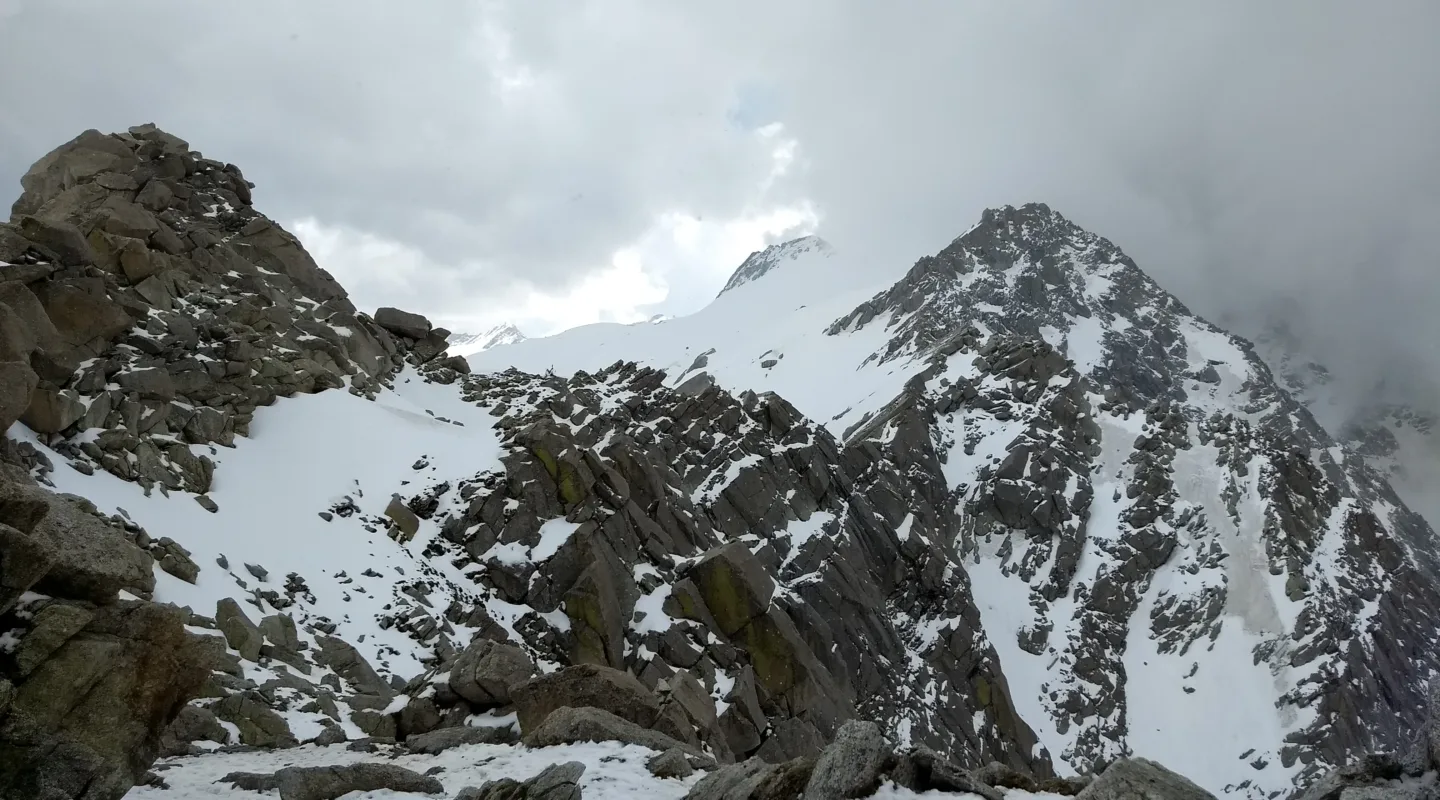

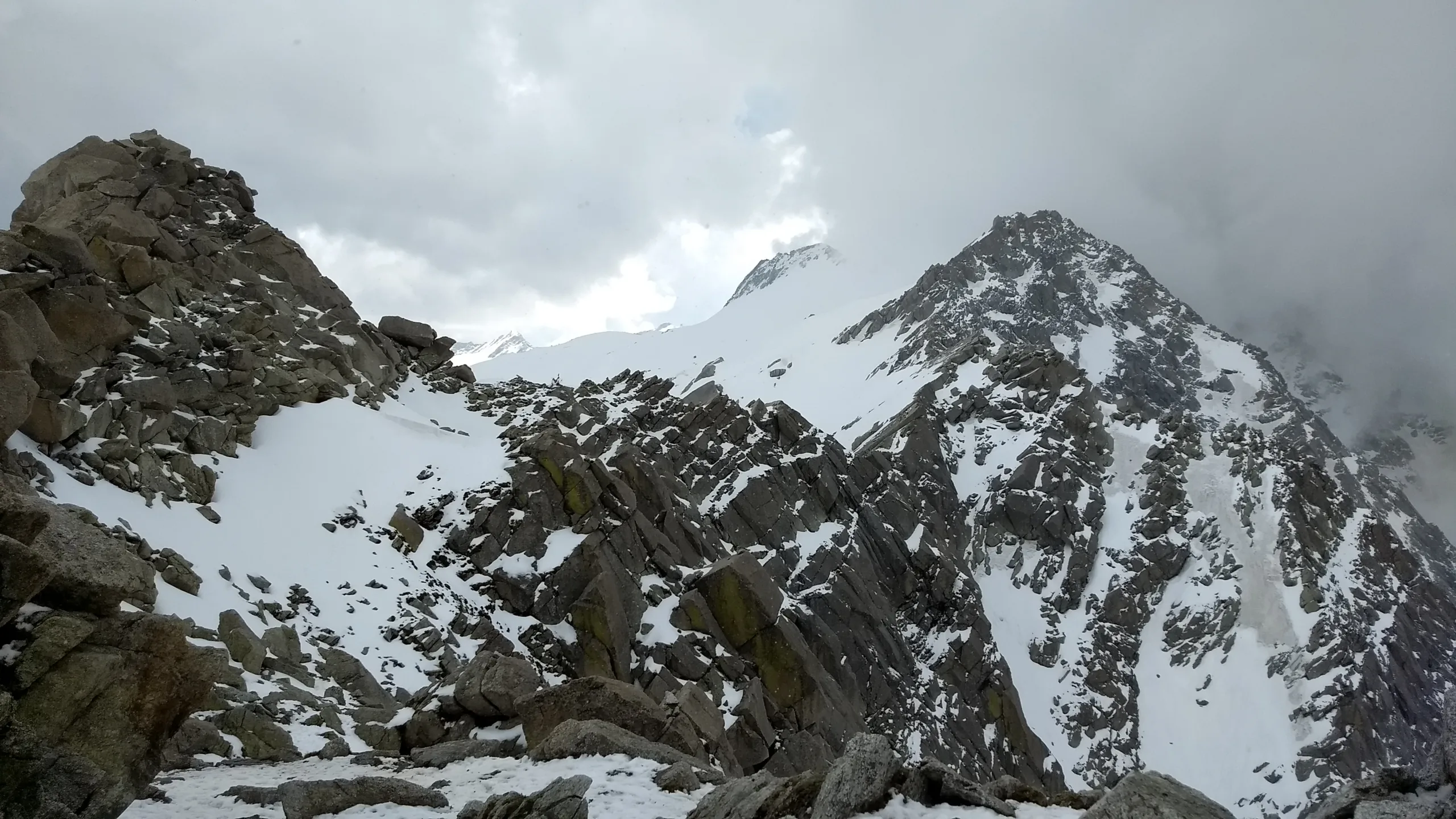
The Indrahar Pass trek is the natural next step after Triund: a high-altitude crossing of the Dhauladhar range that takes you from the forest trails of McLeod Ganj to a pass at about 4,342 metres, with the Pir Panjal range, Manimahesh Kailash and the Kangra Valley spread out below. It is one of the closest high passes to a major town, and it packs forest, meadow, glacier and summit views into a compact 4-day route.
At a Glance
| Starting point | McLeod Ganj, Dharamshala |
|---|---|
| Maximum altitude | About 4,342 m (14,245 ft) |
| Duration | 4 days / 3 nights on the mountain |
| Difficulty | Moderate to difficult |
| Best time | May to June and September to October |
| Camping | Triund and Lahesh Cave |
| Price | From Rs 4,999 per person |
| Next departures | 17-22 November 2026 |
Why Trek Indrahar Pass?
The route climbs through oak, deodar and rhododendron forest to the alpine meadow of Triund, crosses the seasonal Laka Glacier, and camps at Lahesh Cave before the long summit day to Indrahar Pass. The pass is a historic shepherd crossing between the Kangra and Chamba valleys, and the views from the top take in the Pir Panjal range, Manimahesh Kailash and the Dhauladhar peaks. If you have done the Triund Trek and want something harder, this is the natural next step.
Indrahar Pass Trek Difficulty
The trek is graded moderate to difficult. The summit day is long, the boulder sections near Lahesh Cave are demanding, and weather in the Dhauladhars can change quickly. Previous experience on treks like Triund or the Laka Glacier Trek is strongly recommended, along with good fitness and careful acclimatisation.
Best Time to Trek Indrahar Pass
May to June brings snow patches on the higher sections, pleasant daytime temperatures and clear mountain views. September to October is the best season for summit views, with clear skies and stable weather. July and August are not recommended because of the monsoon, slippery trails and landslide risk.
Indrahar Pass Trek Itinerary
Day 1: McLeod Ganj to Triund
Start from McLeod Ganj after a morning briefing and climb through oak and rhododendron forest via Gallu Devi Temple to Triund, about 9-10 km. Camp at Triund with sunset views of the Dhauladhar range and Kangra Valley.
Day 2: Triund to Laka Glacier to Lahesh Cave
Continue beyond Triund through the Snowline area and across the seasonal Laka Glacier to Lahesh Cave, about 5-6 km. This is an important acclimatisation day before the summit attempt.
Day 3: Lahesh Cave to Indrahar Pass and back
Start early for the summit push, about 9-10 km with 8-10 hours of trekking. Reach Indrahar Pass at about 4,300 m and enjoy views of the Pir Panjal range, Kangra Valley, Manimahesh Kailash and the Dhauladhar peaks, then descend to Triund.
Day 4: Triund to McLeod Ganj
Descend through the forest trail to Bhagsunag and McLeod Ganj, about 12-14 km, and end the trek. For Delhi trekkers, the trip runs with an overnight Volvo either side, making it about 6 days door to door.
How to Reach the Indrahar Pass Trailhead
McLeod Ganj is about 10 km above Dharamshala town in Kangra district, Himachal Pradesh. The nearest airport is Gaggal (Kangra), roughly 20 km away, and the nearest broad-gauge railhead is Pathankot, about 90 km south. Most trekkers come overnight by Volvo or tempo traveller from Delhi, which takes around 10 to 12 hours, or fly into Gaggal and drive up. Our departures include the overnight Volvo from Delhi, so you arrive in McLeod Ganj in the morning and start walking the same day.
Acclimatisation and Safety on Indrahar Pass
The jump from Triund at about 2,875 m to the pass at 4,342 m happens over two days, which is why Day 2 at Laka Got is treated as an acclimatisation day rather than a push. Drink more water than you think you need, eat properly at every camp, and tell your trek leader immediately if you get a headache, nausea or unusual breathlessness. The boulder fields between Lahesh Cave and the pass are the most technical part of the route and are best crossed with a guide who knows the line. Weather in the Dhauladhars can close in within an hour, so the summit attempt starts early and the leader may turn the group back if conditions are unsafe. That decision is always about safety, not fitness.
What to Carry
Warm layers and a windproof jacket, a good pair of trekking shoes, a headlamp, sunscreen and sunglasses, a rain cover, and personal medicines. A government photo ID is required for the forest checkpoints.
Related Treks and Trips
Ready to cross the Dhauladhar range? Book the Indrahar Pass Trek with Wanderers’ Nest, or message us on WhatsApp to check seats on the next departure.
Frequently asked questions
What does this guide to Indrahar Pass Trek cover?
Photograph: Vivek machra, CC BY-SA 4.0, via Wikimedia Commons The Indrahar Pass trek is the natural next step after Triund: a high-altitude crossing of the Dhauladhar range that takes you from the forest trails of McLeod Ganj to a pass at about 4,342 metres,.
What are the main things covered in this Indrahar Pass Trek guide?
The guide walks through At a Glance, Why Trek Indrahar Pass?, Indrahar Pass Trek Difficulty, Best Time to Trek Indrahar Pass and Indrahar Pass Trek Itinerary.
Which months does this guide recommend?
The months discussed are May, June, July, August, September and October. Conditions outside those windows change the route, so check the current status before you plan travel.
How hard is the route described here?
The guide rates it moderate. Match that against your own fitness and recent walking before you commit to dates.
How do I book the trip described in this guide?
Open the trip page linked in the article, pick a departure that suits you and book online, or message us on WhatsApp with your dates and group size and we will confirm availability.
What does this trip cost?
Current pricing is on the linked trip page, along with the full inclusions and exclusions. Rates vary by season and departure.
