Here’s the Winter Spiti Road Trip content — clean, original, no third-party site references:
Winter Spiti Road Trip: The Ultimate Guide to India’s Frozen Wilderness
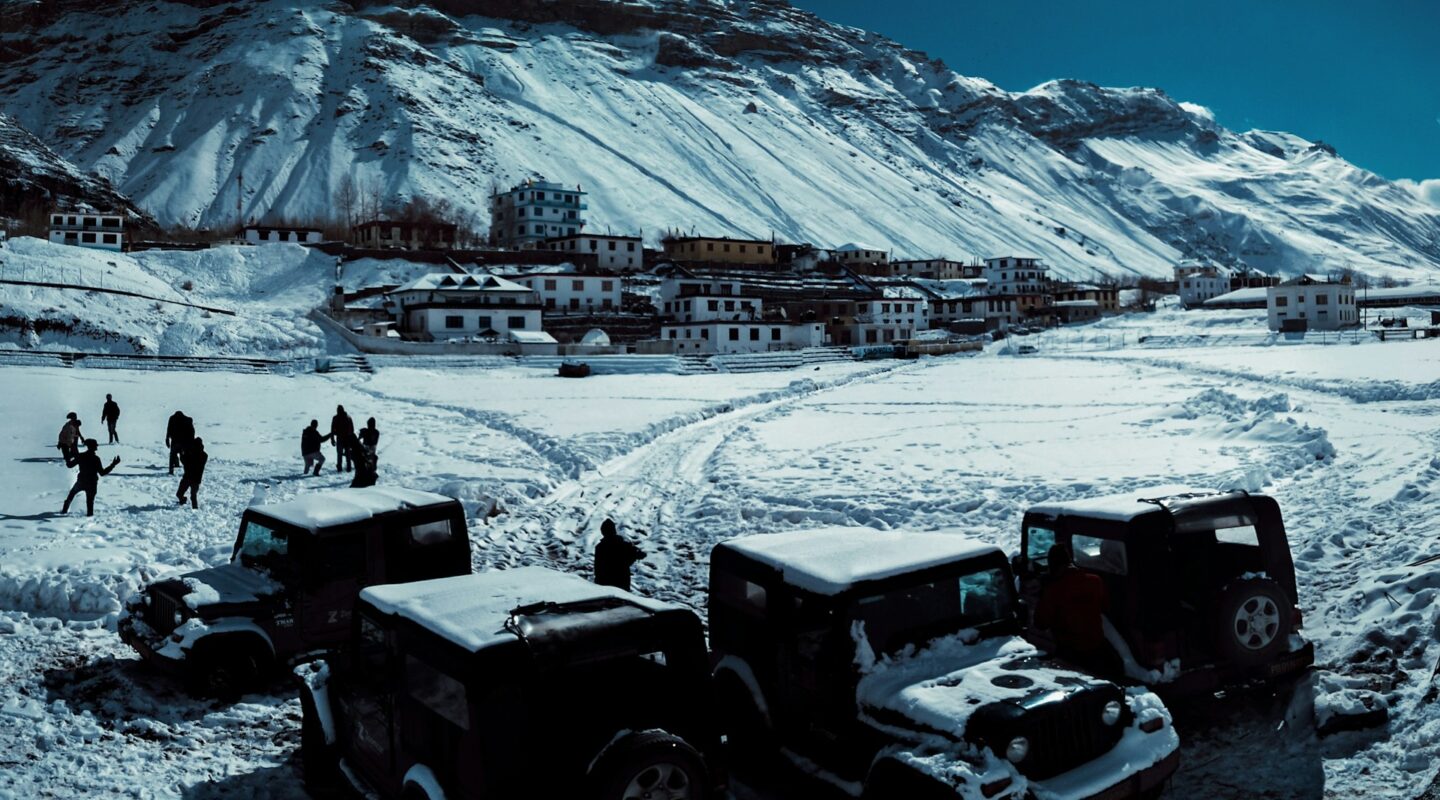
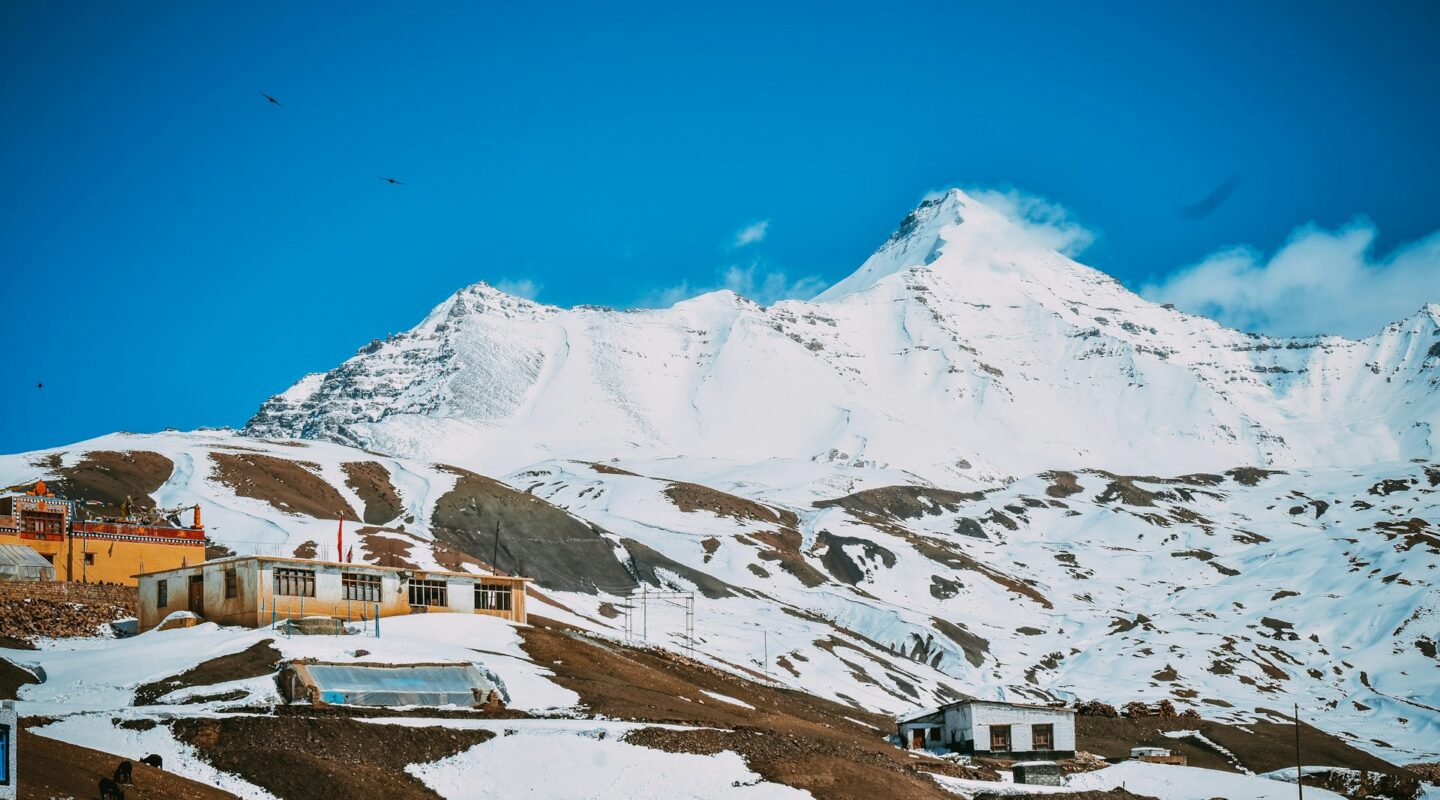
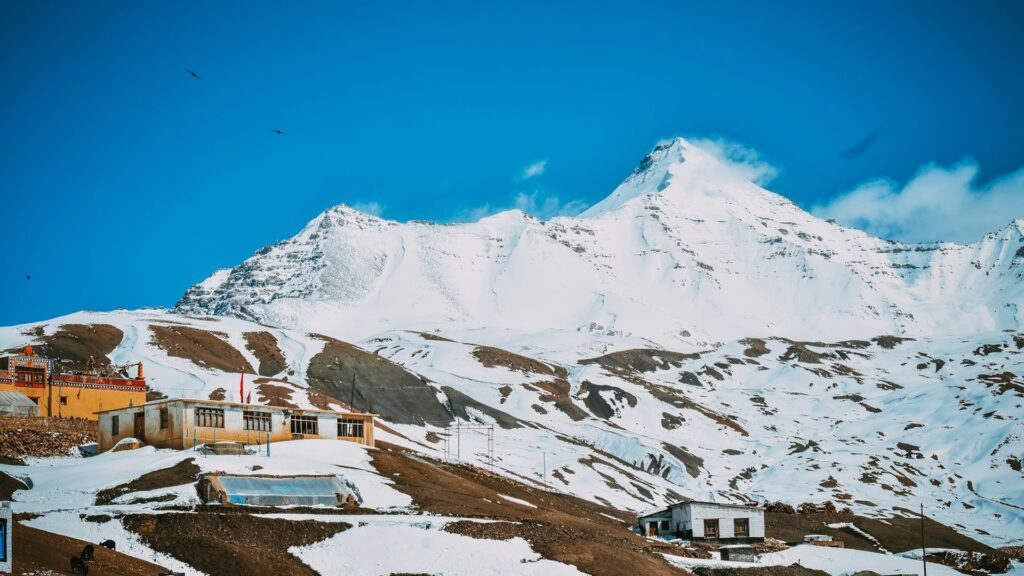
If you’ve ever dreamed of driving through a landscape that feels like the edge of the world — white, silent, and impossibly beautiful — a winter Spiti road trip is exactly that. From November to March, Spiti Valley transforms into a snow-covered cold desert where every village, road, and mountain peak disappears under a thick blanket of white.
This is not a trip for the faint-hearted. It is a trip for those who want to experience the Himalayas at their most raw, most honest, and most spectacular.
Why Choose a Winter Spiti Road Trip?
Most travellers visit Spiti in summer. That’s exactly why you shouldn’t.
- 90% fewer crowds — no traffic jams, no packed guesthouses, no noise
- Snow leopard sightings — winter is the only season you have a real chance
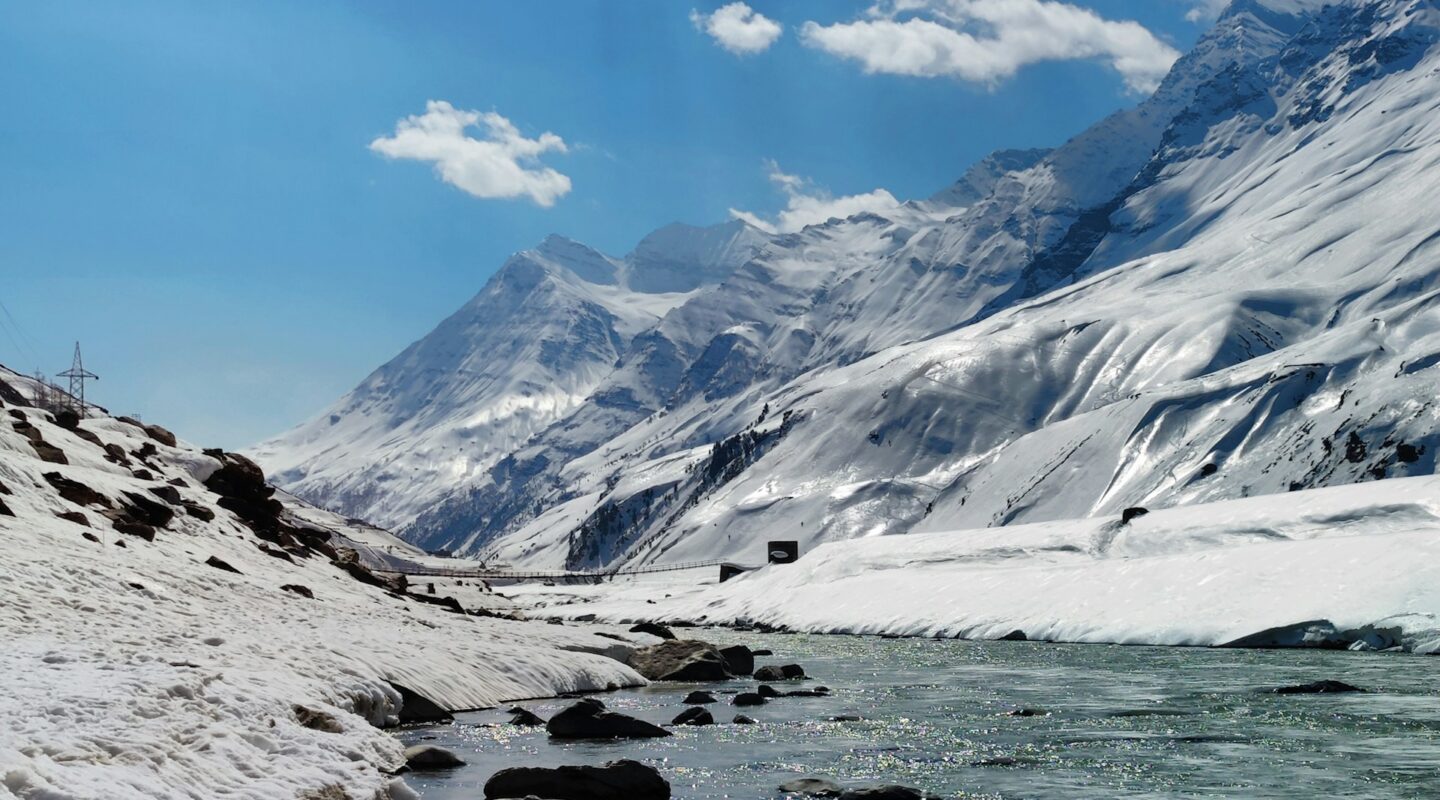
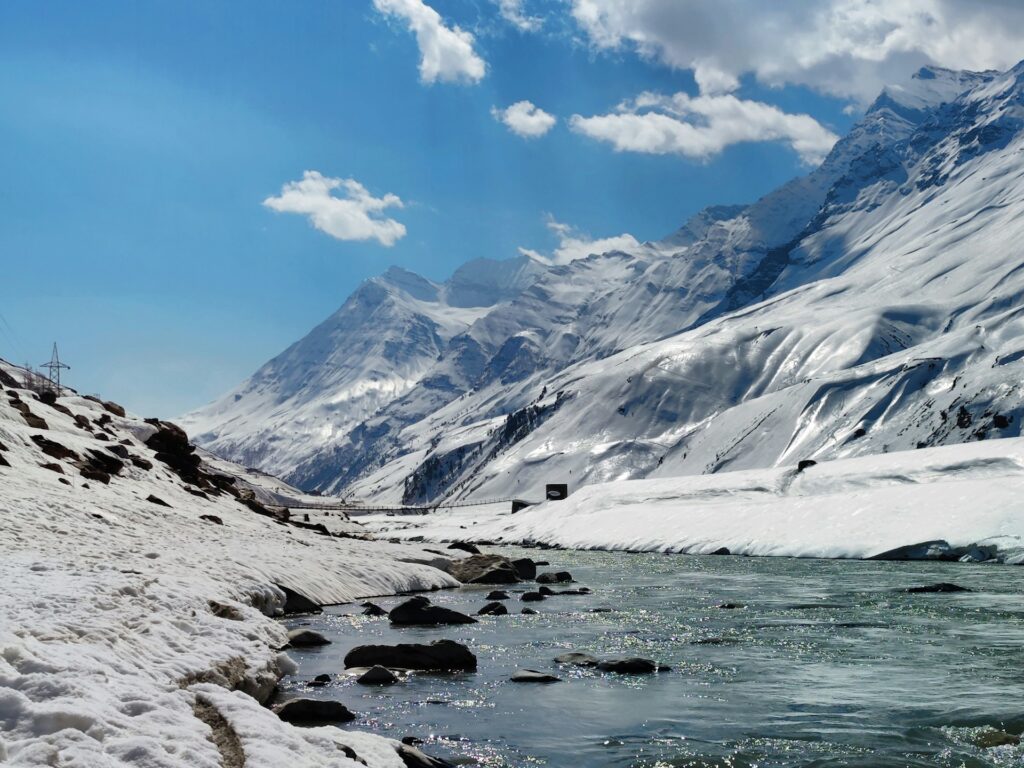
- Frozen rivers and lakes — Spiti River, Nako Lake turn into ice sculptures
- Authentic local life — homestays, butter tea, archery festivals, and monastery prayers in silence
- Photographer’s paradise — stark white landscapes against cobalt blue skies with zero haze
Best Time for a Winter Spiti Road Trip
| Month |
Conditions |
Best For |
| November |
Early snowfall, roads still open |
First snow experience |
| December |
Heavy snowfall sets in |
Snow landscapes, solitude |
| January–February |
Peak winter, frozen everything |
Snow leopard tracking, white Spiti |
| March |
Gradual thaw begins |
Slightly easier travel, still snowy |
Daytime temperatures: -5°C to -10°C Nighttime temperatures: -20°C to -30°C
The Only Winter Route: Shimla–Kinnaur–Spiti
This is the most important thing to know before planning.
The Manali–Spiti route is completely closed in winter. Rohtang Pass and Kunzum Pass are buried under several feet of snow from November to April. The only open road is:
Delhi → Shimla → Narkanda → Rampur → Tapri → Khab → Nako → Tabo → Kaza
- Distance: ~700 km from Delhi to Kaza
- Drive time: 2–3 days (with stops)
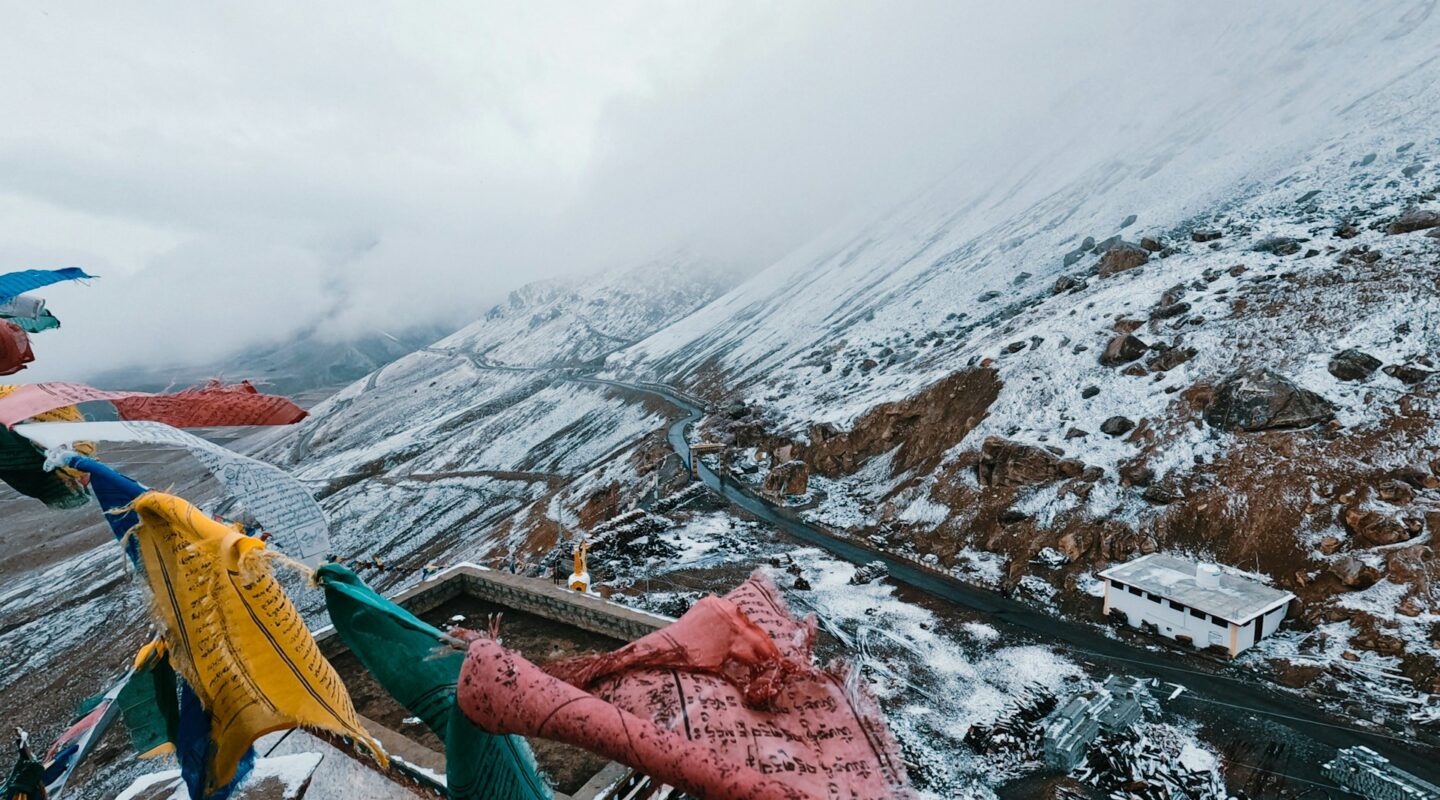
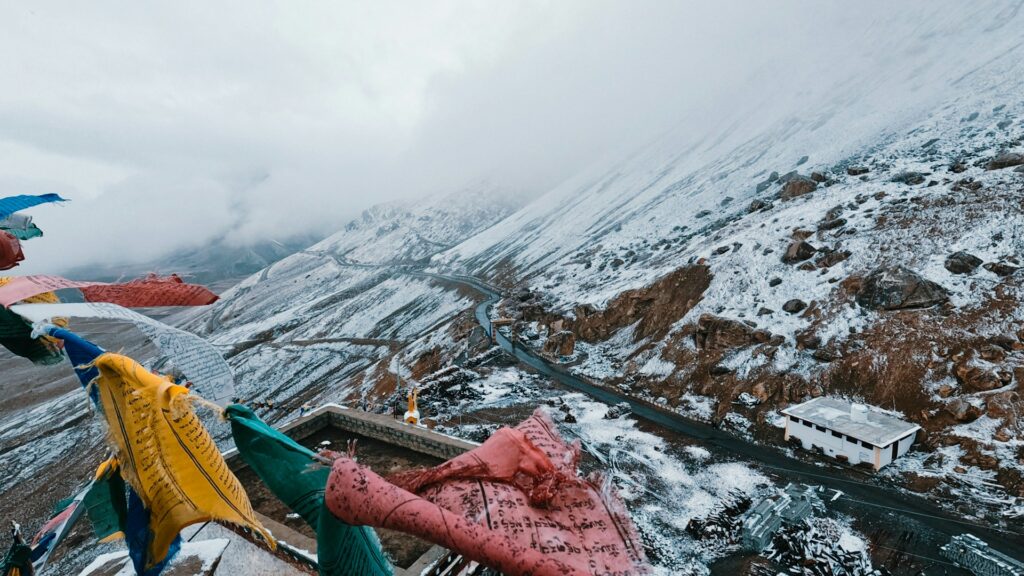
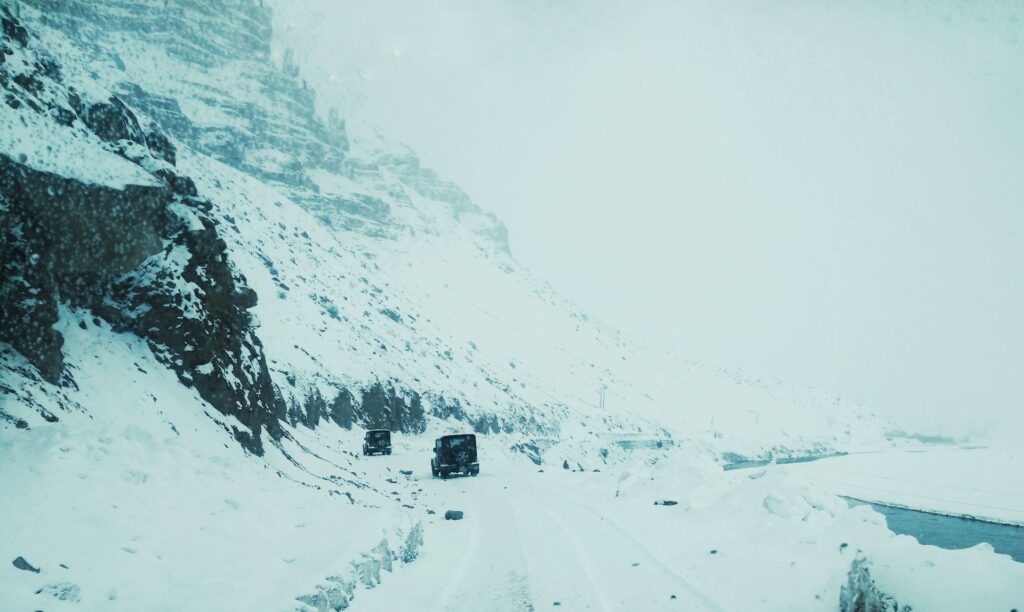
- Road condition: Narrow, icy, single-lane in stretches — 4×4 vehicle mandatory
- Return: Same route back (no loop possible in winter)
Top Places to Visit on a Winter Spiti Road Trip
Nako Village & Nako Lake
- First major halt after entering Spiti district
- Nako Lake freezes completely by January — a stunning sheet of ice surrounded by snow peaks
- Warm homestays, local food, and incredible silence
- Khab Sangam (confluence of Spiti and Sutlej rivers) is just before Nako — don’t miss it
Tabo Monastery — The Ajanta of the Himalayas
- Nearly 1,000 years old — one of the oldest continuously functioning monasteries in the world
- Famous for ancient frescoes and thangka paintings inside mud-walled prayer halls
- In winter, the mud walls provide natural insulation and the silence inside is profound
- Meditation caves above the monastery — icy paths, so tread carefully
Dhankar Monastery
- Perched dramatically on a cliff overlooking the confluence of the Spiti and Pin rivers
- Once the seat of the kings of Spiti
- One of the most photogenic spots in the entire valley
- Road access depends on snowfall — check conditions locally before visiting
Kaza — Base Camp of Winter Spiti
- District headquarters and the main hub for winter exploration
- Gateway to Ki Monastery, Kibber, Langza, Hikkim, and Komic villages
- Local markets, small restaurants serving Spitian food, basic ATM (carry cash from Shimla)
- In February, locals hold an archery competition at Kaza Monastery — worth timing your trip around
Ki (Key) Monastery
- 1,000-year-old monastery perched on a hilltop at 4,166 m
- Snow-covered backdrop in winter makes it one of the most spectacular sights in India
- Watch monks perform their daily rituals in a setting of complete stillness
- One of the most photographed places in all of Spiti
Hikkim — World’s Highest Post Office
- Located at 4,440 m — the highest functioning post office on Earth
- Send a hand-written postcard to someone back home — it will actually be delivered
- Short drive from Kaza, often bundled with Komic and Langza villages
Gue Village — The 500-Year-Old Mummy
- Home to the naturally preserved mummy of Buddhist monk Sangha Tenzin
- Seated upright in a glass case — hair, skin, and teeth still intact, no chemicals used
- Approx. 35 km from Tabo — a short detour off the main road
- In winter the village is eerily quiet, adding to the atmosphere
Pin Valley National Park — Snow Leopard Territory
- Best chance to spot a snow leopard is between January and March
- Also home to Himalayan ibex, Tibetan wolf, red fox, and bharal (blue sheep)
- Hire a local guide from Kaza for wildlife tracking — they know the terrain
- Mudh Village inside Pin Valley is the last motorable point in winter
Winter Spiti Road Trip — Suggested 9-Day Itinerary
| Day |
Stretch |
Highlights |
| Day 1 |
Delhi to Shimla |
Overnight drive or stay |
| Day 2 |
Shimla to Nako |
Khab Sangam, Kinnaur scenery |
| Day 3 |
Nako |
Nako Lake, acclimatisation |
| Day 4 |
Nako to Tabo |
Gue Mummy (detour), Tabo Monastery |
| Day 5 |
Tabo to Kaza |
Dhankar Monastery, Spiti River views |
| Day 6 |
Kaza local |
Ki Monastery, Kibber, Komic, Hikkim |
| Day 7 |
Pin Valley |
Snow leopard tracking, Mudh Village |
| Day 8 |
Kaza to Nako |
Return journey begins |
| Day 9 |
Nako to Delhi |
Long drive back |
Vehicle & Road Tips
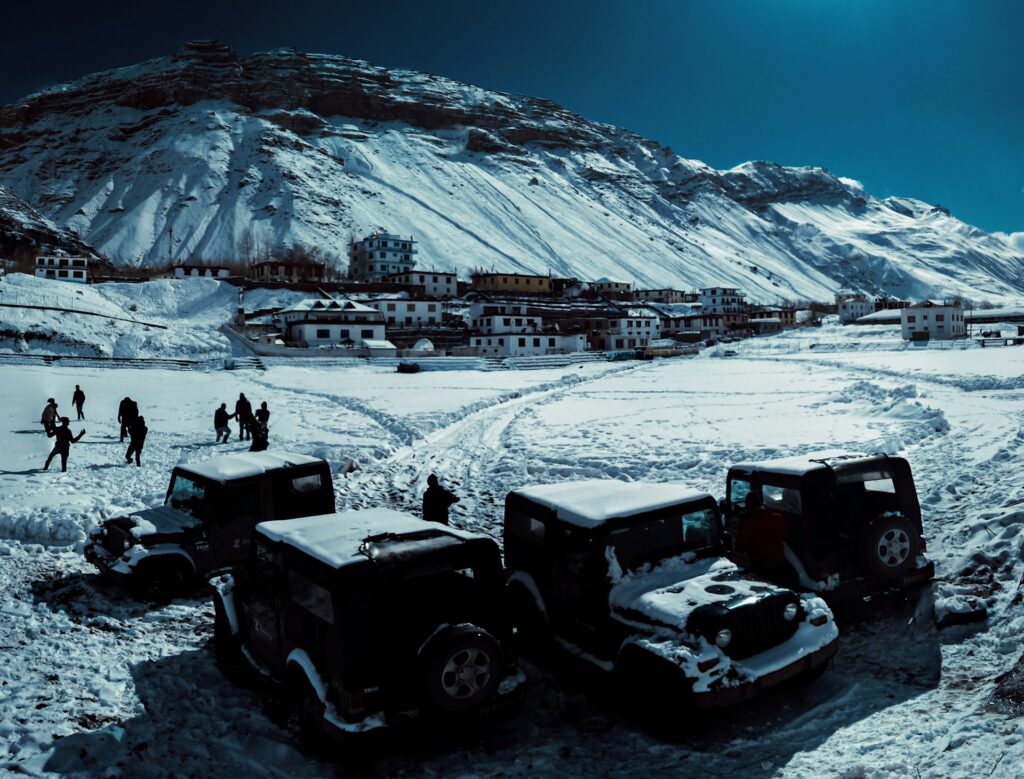
- Mandatory: 4×4 SUV (Innova Crysta, Scorpio, or similar at minimum — ideally a 4WD)
- Carry snow chains — icy roads in Nako, Tabo, and beyond
- Hire a local Spitian driver if self-driving feels risky
- Carry extra fuel — petrol pumps are scarce beyond Reckong Peo
- Start each day’s drive by 7–8 AM — daylight hours are short in winter
Where to Stay — Winter Accommodation
- Homestays are the best and often the only option in most villages
- Stay with local families — warmth (literal and cultural), home-cooked meals, and real conversation
- Kaza has a few guesthouses open in winter
- Book ahead — fewer places operate and beds fill up with the limited crowd that does come
- Carry a quality sleeping bag — even heated rooms can drop below 5°C at night
What to Eat in Winter Spiti
- Butter tea (Po cha) — salty, warming, and you’ll either love it or hate it
- Thukpa — Tibetan noodle soup, the ultimate comfort food at altitude
- Tsampa — roasted barley flour mixed with butter tea; local staple
- Momos — steamed or fried, available in Kaza
- Siddu — Himachali stuffed bread, found in lower Kinnaur villages on the way
Packing List for Winter Spiti Road Trip
Clothing
- ✅ Thermal base layers (top + bottom) — at least 2 pairs
- ✅ Heavy fleece or down mid-layer
- ✅ Windproof and waterproof outer jacket
- ✅ Snow boots / insulated trekking boots
- ✅ Balaclava, woollen hat, neck gaiter
- ✅ Gloves — inner liner + outer waterproof shell
- ✅ Woollen socks — at least 4–5 pairs
Essentials
- ✅ High-SPF sunscreen (sun reflects off snow intensely)
- ✅ UV-protection sunglasses
- ✅ Power bank + solar charger (power cuts are frequent)
- ✅ Cash — withdraw enough from Shimla; ATMs don’t exist beyond Reckong Peo
- ✅ Offline maps (Google Maps, Maps.me downloaded)
- ✅ First aid kit + altitude sickness medication (Diamox)
- ✅ Dry snacks, energy bars, instant coffee
Important Things to Know Before You Go
- Pipes freeze in winter — expect no running water in many homestays
- Electricity is irregular — carry a torch and power bank always
- Mobile network: BSNL and Jio work in Kaza; expect a complete digital detox elsewhere
- Altitude: Kaza sits at 3,800 m — acclimatise properly at Nako before pushing higher
- Permits: Inner Line Permit required for areas near the Tibet border — get it in Reckong Peo or Kaza
- Medical facilities: Nearest hospital is in Reckong Peo — carry a comprehensive first aid kit
- Alcohol: Not advisable at altitude in extreme cold — it worsens dehydration